Showing posts with label Jesus. Show all posts

Sunday, March 16, 2008

Being vegan: S is for...

Today begins Holy Week - the final week of Jesus' earthly life, as we journey towards Easter in this season of Lent. One important event in Jesus' ministry, which is often overlooked in the remembrances of this week, is Maundy Thursday, when Jesus in the Upper Room washes the feet of his disciples.

In this simple act of service, Jesus shows his followers "the full extent of his love" (John 13:1), and then commissions them to follow his example and "do as I have done for you" (John 13:15). Serving others is the way we follow Jesus and show the full extent of our love for others. It is the core of Jesus' message and the reason we remember the gift of his life - his birth at Christmas, his death at the cross on Good Friday, and his resurrection and victory over death on Easter.

While giving our life in service of others is the call of the Christian life, veganism takes the understanding of service one step further in our next principle. For a vegan:
S is for SERVICE to humanity, nature, and creation

Vegans are committed to serving "others", but recognize that the "other" is not just a member of humanity, but includes every living creature on planet earth, our common home. Veganism embraces a reverence for all of life, and considers all life (not just the lives of "rational beings") as sacred and worthy of respect, love, service, and protection.

As a follower of Jesus, I have come to believe that this vegan principle is very much in line with the call of Christ. When Jesus taught his followers to pray "Our Father", he opened up a whole network of relationships, not just with humanity, but with all that has been created and finds its being in God.

In his 13th century Canticle of Creation, St. Francis of Assisi praises God with Brother Sun, Sister Moon, Brother Air, Sister Water, Brother Fire, and Sister Earth. While the heavens declare God's glory, humanity is simply one member of the creation choir called to praise the Creator.

Unfortunately, in our pride and desire for control, human society has lost sight of its rightful place in the natural world as "caretakers of the garden". Only when we recognize that we are finite creatures, with temporary residence on planet earth, will humility be birthed, and service in the name of Jesus can begin. We are members of a cosmic family, created by God the Father, united in love through the Spirit, and called by Jesus the Christ to love and to serve all that God has made, everything which reflects the glory and beauty of the One who is all and is in all.

"A bond exists between all things," says Luther Standing Bear, Lakota Chief of the Oglala, "because they all drink the same water and breathe the same air." Or as Henri Nouwen writes, "For him who has become close to God, all is one. Only God counts, and in God all people and all things are embraced with love." (Show Me the Way, p. 97)

For the followers of Jesus, the act of washing feet vividly portrays the essence of what it means to serve and to love. First, we lay aside our own needs. We then kneel in humility to tend to the needs of the other.

Because we must first abstain from our own wants (the first vegan principle) and master our own desires (the fourth), serving others is never easy. Yet in our humanity, it is easier for us to recognize the needs of our human brothers and sisters than the needs of our extended cosmic family. This is where servanthood often begins - washing feet, tending to basic human needs, like feeding the poor, providing clean water, caring for the sick, tutoring a child, freeing the enslaved, providing an encouraging word, making a charity donation, lending a hand, being a friend. We are familiar with such base needs because they are also our own.

In our service of nature and creation, however, we are not as aware of needs -- or at least, not yet. Once upon a time, humanity lived in harmony with nature, but unfortunately in this new millennium, our world bears the scars of imbalance because of the human drive for control, power, and domination. Global warming, climate change, acid rain, air pollution, water pollution, deforestation, endangered species, species extinction, animal exploitation -- all are common terms today, which were unheard of a generation ago.

It does not take a degree in biology (which I do not have) to recognize that something is terribly wrong in our world. Something needs to be done! To take action to preserve the environment is, I believe, how we serve.

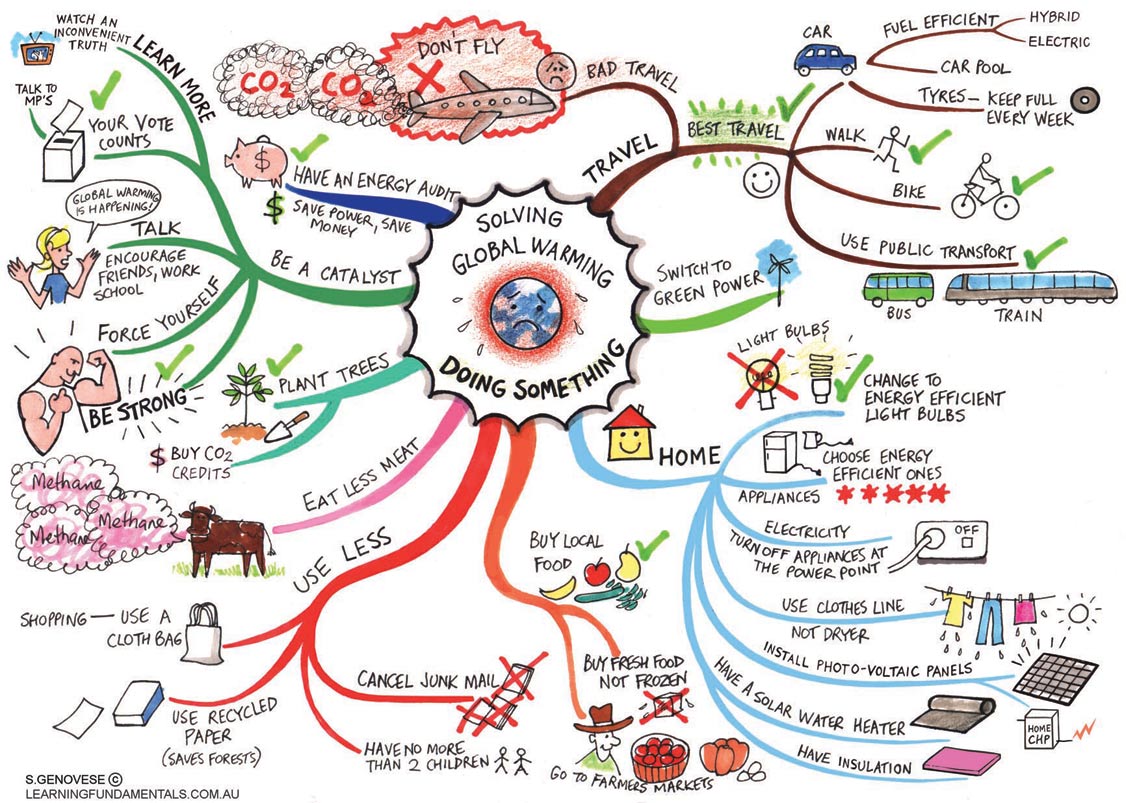
We serve nature and creation when we
- replace incandescent light bulbs with fluorescent,
- walk and not drive,
- conserve heat and water,
- refuse, reuse, reduce, recycle,
- make a lifestyle change to lessen our carbon footprint,
- write a letter of environmental advocacy to an elected official,
- buy local and organic,
- read and raise aware of the global devastation of climate change,
- and of course, we serve God and honor the members of our animal family best when we choose a plant-based vegan diet!

My prayer is that we would each grow in our love of God, and grow in love for your neighbors by serving, not just humanity, but the "other neighbors" as well that live in the beauty of our communities, on this home we call planet earth.

"I do not think that the measure of a civilization is how tall its buildings of concrete are, but rather how well its people have learned to relate to their environment and fellow human being."
 (Sun Bear, Chippewa medicine man)

Here are some suggestions of what you can do to combat global warming...
Sunday, March 2, 2008

Being vegan: I is for...

An oxymoron is a figure of speech that combines two normally contradictory terms. It is a phrase that makes you go, "hmm" as you consider the meaning of each separate word. Some familiar oxymorons: "jumbo shrimp", "pretty ugly", "silent scream", and everyone's favorite, "Microsoft works".

Though technically not "oxymorons", Joanne Stepaniak considers a few paradoxes in her book, Being Vegan that cause you to pause and think:
- consumers who purchase dolphin-safe tuna (what about tuna safety?)
- a bird-watcher who eats poultry
- an antiabortionist who supports capital punishment
- an animal rights activist who wears leather shoes
There is a degree of irony, she suggests, when compassion is selectively applied.

"The vegan ethic," Stepaniak writes, "applies compassion indiscriminately. In theory, vegans are concerned about every group or individual who is exploited, human or nonhuman." (p. 52) The challenge is taking that theory, and applying it to one's daily decisions.

While everyone has blind spots, vegans strive to recognize their own, and then to do something about them, because the third core principle of veganism:
I is for INTEGRITY of thought, word, and deed

Integrity is about consistency -- consistency in what a person thinks, says, and does. Integrity calls us to watch for blind spots so that no one will go "Hmm" if they were to observe our lives. Integrity is rooted in one's character, and character is "who you are when no one (but God) is watching."

In his ministry, Jesus confronted the hypocrisy he witnessed in people, especially "religious-types", who articulated high moral values but failed to live them out. "Simply let your 'Yes' be 'Yes,' and your 'No,' 'No'," Jesus said in Matthew 5:37. Do what you say. Say what you do. Consistency in character is the call for one who claims to follow Christ.

It was a year ago that I made the transition in my diet from "occasional meat eater" to "vegetarian". As my convictions were forming about why a non-meat diet was healthful for me and helpful for the environment, I came to believe that if I were to continue eating meat, I would need (I journaled) "a rationale for why I may choose meat so it does not appear to simply be at random." Finding no good reason, I was soon selecting non-meat dishes every meal. As I continued to read and to research vegetarianism and veganism, the transition to an animal-free diet (no dairy, eggs, et al) and then to an animal-free lifestyle was a logical journey of personal integrity based in compassion.

Stepaniak writes, "Compassion, according to vegan principles, accords no hierarchy of lesser or greater value to any living being. To vegans, all life is equally precious." (p. 88) And as a follower of Jesus, that is foundational to my values, too.

Much of my vegan journey has been rooted in the question = WHY? Why do I need to eat this? Why do I need to purchase this? Why do I believe this? Why do I value that? If there is a more compassionate alternative which would extend care to creation, cut down my carbon footprint, love others, and honor God, then why would I NOT want to do that?

I still have my vegan blind spots, about which I have blogged. My dietary exceptions (including chocolate cake) are one area, but there are others. I wrestle with what those exceptions and blind spots suggest to others, and how they impact my integrity as a vegan. My journey continues.

I'm taking a course at the Franciscan School of Theology this semester. I'm prayerfully considering a full-time return to seminary. The more I learn about Saint Francis of Assisi, the more I am drawn to Franciscan creation theology and eco-spirituality. Because of his love for God the Creator, Francis lived in harmony with all creation and because of his love for Jesus the Christ, he lived in the fullness of the gospel, the poverty that is found in full dependence on God. The patron saint of animals and ecology was a man of deep integrity.


In The Life of Saint Francis, Julian of Speyer notes, "Since he traced all things back to their beginning, he called every creature 'brother,' and, in his own praises, continuously invited all creatures to praise their one common Creator." (p. 401) For Francis, the key to his integrity was living in God's original intention at creation, which I highlighted last week.

"As it was in the beginning is now and will be forever" is a common phrase in the praises attributed to St. Francis. As I strive to live as a vegan follower of Christ, I find this an inspiration for my integrity = To live each day in the Garden principle of "harmlessness", envisioned by the prophet Isaiah to be re-established with the return of the Christ. "As it was in the beginning is now and will be forever."

"There is an incredibly rewarding sense of peace and satisfaction in knowing that we are doing the best we can for those most in need," writes Stepaniak. "The outcome is irrelevant because, if we embody our ethics, the influence of our short presence on this earth will continue its effects long after we are gone." (p. 60)

As you journey with integrity this Lenten season, may you in the end be found faithful.

Sunday, February 24, 2008

Being vegan: H is for...

News of the largest US beef recall last week brought to the national spotlight the abuses endured by animals in today's meat industry. Though these reports and horrific images are now fading from the media and the minds of mainstream America, reports of animal cruelty continue, and I find my commitment to the first of 6 vegan principles -- ABSTINENCE from animal products strengthened.

In light of the reported 143 million pounds of recalled beef this past week, and the 10 billion animals raised and slaughtered in the US each year for food, the second principle for a vegan...
H is for HARMLESSNESS with reverence for life

Though this may sound crude and possibly offensive to some, the primary focus of the meat industry is essentially -- death. Animals are viewed as raw materials, commodities, and product, slaughtered en masse for human consumption in the name of food.

Carol Adams in her book, Living Among Meat Eaters, notes that while a meat-eating world organizes itself around death, it is a plant-based world that organizes itself around life (p. 217). Veganism and a vegetarian diet celebrate life by refraining from practices that harm animals, and seeking to live in harmony with all living beings.

According to Joanne Stepaniak, a vegan is "a person who is committed to and practices reverence and respect for all life" (Being Vegan, p. 5). This begins in a vegan's dietary choices, but must extend to all of life's decisions, choosing to "Do the least harm and the most good".

As William Blake has said, "everything that lives is holy, life delights in life." Veganism delights in life, and as I desire to honor my Creator, veganism helps me see evidence of God's holy presence in all things. There is harmony and a "harmlessness" in vegan principles, as veganism is a lifestyle choice of peace, with reverence and awe for all that lives, moves, and breathes.

An unrealistic utopian vision? It should not be for those who put their hope in God! A vision of peaceful co-existence is found in God's Word, the Bible, the holy promises and premises of God.

Genesis paints a portrait of life in the Garden of Eden where all of God's creatures live in harmony, humanity included. Though humankind is given "dominion" over animals (or "rule" in some translations), it is not a "lording it over them". As the Christian Vegetarian Association explains, dominion is a "sacred stewardship, since God immediately afterward prescribed a vegetarian diet in a world God found 'very good'. Created in God's image of love, we are called to be caretakers of God's Creation, not tyrants over God's creatures".

Prophecies in Isaiah 11:6-9 (NCV) envision a return to that peaceful creation harmony."Then wolves will live in peace with lambs, and leopards will lie down to rest with goats. Calves, lions, and young bulls will eat together, and a little child will lead them. Cows and bears will eat together in peace. Their young will lie down to rest together. Lions will eat hay as oxen do. A baby will be able to play near a cobra's hole, and a child will be able to put his hand into the nest of a poisonous snake. They will not hurt or destroy each other on all my holy mountain, because the earth will be full of the knowledge of the Lord, as the sea is full of water."

When will this take place? When "the root of Jesse" (aka "the Christ") returns as a banner of hope for the people (Isaiah 11:10). Jesus is the Promised One who will reestablish this peaceable kingdom.

Thus, for those who trust in Jesus and call Him Lord, I believe there is a call to choose the harmlessness found in veganism and a plant-based diet. We are to revere life, love all, and re-claim the peace God had originally intended in creation. That for me is "the full knowledge of the Lord", which is to cover the earth, a vision of divine encompassing love.

As we prepare to celebrate new life this Easter, may you choose life over death this Lenten season, by reducing your use of an animal product. And besides, if lions are going to eat hay in the new kingdom, you might find yourself blessed consuming a plant-based diet too!