Showing posts with label global warming. Show all posts

Sunday, January 18, 2009

The Standard American Diet 2

This is part 3 of my research on global food movements, entitled
GLOBALIZATION: It's what's for dinner.
(Please note: This week's photo may be disturbing, yet for some, it is dinner.)

A SAD STORY:
The Standard American Diet and Farming


The rise of the global fast food empire has not only changed dietary patterns and increased health risk, it has also led to fundamental changes in the farming industry. What came first - the new technologies or the demand for cheap standardized quality-controlled food - is hard to say, but the two were wed in the fast food industry, which has transformed global food production over the past 50 years.

In his book, Schlosser describes the "advances" in potato production, as well as the beef and poultry industries during the initial rise of the fast food giants. Though more efficient and cost effective, the changes resulted in major abuses, which continue to impact people and the environment. Prompted by the needs of these growing corporations, large farms have now replaced small farms; the harvest of a single product has replaced a variety of rotated crops; pesticides and synthetic fertilizers are now required necessities; antibiotics and growth hormones in meat are standard practices; assembly line meat-packing abuses, slaughter house wastewater "lagoons," meat contamination, food borne pathogens, chemicals, preservatives and additives in processed foods, genetically modified crops (GMO), intense competition, multinational corporations - all are the realities of contemporary food production due in large part to profit on the side of the producer and increased demand on the side of the consumer.

"Agricide" is how Michael W. Fox describes the quiet holocaust taking place worldwide in the animal kingdom and in the environment as human beings, often as unknowing perpetrators, participate in the inhumane treatment of animals by purchasing certain foods, which lead to the production of deadly environmental pollution. [8] It is the dietary demand for a Western diet of meat, represented in fast food, which has changed farming practices worldwide and is having a negative impact on the environment.

According to Vital Signs 2007-2008 by The Worldwatch Institute, an independent research organization, meat production increased 2.5% to an estimated 276 million tons in 2006, with an expected rise in 2007 to 285 million tons. [9] The increase in meat production has been on a steady rise since studies began in 1961, with the current surge coming from Asia. It is estimated that in the developing world, people eat about 32 kilograms of meat per year, compared with almost 85 kilograms per person in the industrial world. With the ever-expanding advance of the fast food industry, this figure is expected to continue its rise as dietary preferences shift worldwide as is currently occurring in Asia. "The developing nations are copying us," writes John Robbins. "They associate meat eating with economic status of the developed nations, and continue to strive to emulate it." [10]

Though worldwide livestock production is up, livestock is "the single largest anthropogenic user of land," as meat production accounts for 70 percent of all agricultural land and 30 percent of the land surface of the planet. [11] In addition, they are responsible for 18% of greenhouse gas (GHG) emissions, which is higher than the share contributed by cars and sport utility vehicles. Of GHG, livestock account for 37% of methane, which has more than 20 times the global warming capacity of carbon dioxide, and 65% of nitrous oxide, which comes from the "lagoons" of manure at slaughterhouses. Schlosser explains these lagoons as such, "Each steer deposits about fifty pounds of manure every day. Unlike human waste, this manure is not sent to a treatment plant. It is dumped into pits, huge pools of excrement. . . . The amount of waste left . . . is staggering." [12]

With GHG rising through animal farming and poisonous chemical fertilizers being injected into the soil for crop production, the globalization of the American diet really is an agricide, but food movements across the world are taking notice and taking action.

Next week:
Global Food Movements making a difference

[8] Michael W. Fox, Eating with Conscience: The Bioethics of Food (Troutdale, OR: New Sage Press, 1997), 11.
[9] Danielle Nierenberg, "Meat Output and Consumption Grow," in Vital Signs 2007-2008: The Trends That Are Shaping Our Future, ed. Linda Starke (New York: W.W. Norton & Company, 2007), 24.
[10] John Robbins, Diet For A New America, (Tiburon: H.J. Kramer Book and New World Library, 1987), 351.
[11] Nierenberg, 24.
[12] Schlosser, 150.

Sunday, May 18, 2008

In the footsteps of Francis

Because vegan-me is in the midst of finishing up my first semester at the Franciscan School of Theology with a paper on St. Francis of Assisi and his relationship with creation, this week's blog is simply a reflective thought. It is an example from one of Francis' biographers of Francis' contemplation on creation, which led to his reverence of creation, and to his responsibility to embrace an environment ethic of sustainability. With news reports this week of global natural disasters, food shortages, polar bears on the extinction list, meat recalls, and more, may you be challenged by Francis' example to reflect on what creation is calling you to be and do, in terms of reverence and responsibility in our era of environmental crisis.

Thomas of Celano writes of St. Francis of Assisi:

He rejoices in all the works of the Lord's hands, and through their delightful display he gazes on their life-giving reason and cause. In beautiful things he discerns Beauty Itself; all things cry out to him: "The One who made us is the Best." Following the footprints imprinted on creatures, he follows his Beloved everywhere; out of them all he makes for himself a ladder by which he might reach the Throne. He embraces all things with an intensity of unheard devotion, speaking to them about the Lord and exhorting them to praise Him....

When the brothers are cutting wood he forbids them to cut down the whole tree, so that it might have hope of sprouting again. He commands the gardener to leave the edges of the garden undisturbed, so that in their season the green of herbs and the beauty of flowers may proclaim the beautiful Father of all. He even orders that within the garden a smaller garden should be set aside for aromatic and flowering herbs so that those who see them may recall the memory of eternal savor....

He calls all animals by a fraternal name, although, among all kinds of beast, he especially loves the meek (and those who are going extinct - a vegan-me editorial). Who is capable of describing all of this? Truly, that fountain-like goodness, which will be all in all, already shone clearly in all for this saint.

(From "The Remembrance of the Desire of a Soul by Thomas of Celano" - 2C 165 in Francis of Assisi: The Founder: Early Documents, Volume 2, p. 353-354.)

Sunday, March 16, 2008

Being vegan: S is for...

Today begins Holy Week - the final week of Jesus' earthly life, as we journey towards Easter in this season of Lent. One important event in Jesus' ministry, which is often overlooked in the remembrances of this week, is Maundy Thursday, when Jesus in the Upper Room washes the feet of his disciples.

In this simple act of service, Jesus shows his followers "the full extent of his love" (John 13:1), and then commissions them to follow his example and "do as I have done for you" (John 13:15). Serving others is the way we follow Jesus and show the full extent of our love for others. It is the core of Jesus' message and the reason we remember the gift of his life - his birth at Christmas, his death at the cross on Good Friday, and his resurrection and victory over death on Easter.

While giving our life in service of others is the call of the Christian life, veganism takes the understanding of service one step further in our next principle. For a vegan:
S is for SERVICE to humanity, nature, and creation

Vegans are committed to serving "others", but recognize that the "other" is not just a member of humanity, but includes every living creature on planet earth, our common home. Veganism embraces a reverence for all of life, and considers all life (not just the lives of "rational beings") as sacred and worthy of respect, love, service, and protection.

As a follower of Jesus, I have come to believe that this vegan principle is very much in line with the call of Christ. When Jesus taught his followers to pray "Our Father", he opened up a whole network of relationships, not just with humanity, but with all that has been created and finds its being in God.

In his 13th century Canticle of Creation, St. Francis of Assisi praises God with Brother Sun, Sister Moon, Brother Air, Sister Water, Brother Fire, and Sister Earth. While the heavens declare God's glory, humanity is simply one member of the creation choir called to praise the Creator.

Unfortunately, in our pride and desire for control, human society has lost sight of its rightful place in the natural world as "caretakers of the garden". Only when we recognize that we are finite creatures, with temporary residence on planet earth, will humility be birthed, and service in the name of Jesus can begin. We are members of a cosmic family, created by God the Father, united in love through the Spirit, and called by Jesus the Christ to love and to serve all that God has made, everything which reflects the glory and beauty of the One who is all and is in all.

"A bond exists between all things," says Luther Standing Bear, Lakota Chief of the Oglala, "because they all drink the same water and breathe the same air." Or as Henri Nouwen writes, "For him who has become close to God, all is one. Only God counts, and in God all people and all things are embraced with love." (Show Me the Way, p. 97)

For the followers of Jesus, the act of washing feet vividly portrays the essence of what it means to serve and to love. First, we lay aside our own needs. We then kneel in humility to tend to the needs of the other.

Because we must first abstain from our own wants (the first vegan principle) and master our own desires (the fourth), serving others is never easy. Yet in our humanity, it is easier for us to recognize the needs of our human brothers and sisters than the needs of our extended cosmic family. This is where servanthood often begins - washing feet, tending to basic human needs, like feeding the poor, providing clean water, caring for the sick, tutoring a child, freeing the enslaved, providing an encouraging word, making a charity donation, lending a hand, being a friend. We are familiar with such base needs because they are also our own.

In our service of nature and creation, however, we are not as aware of needs -- or at least, not yet. Once upon a time, humanity lived in harmony with nature, but unfortunately in this new millennium, our world bears the scars of imbalance because of the human drive for control, power, and domination. Global warming, climate change, acid rain, air pollution, water pollution, deforestation, endangered species, species extinction, animal exploitation -- all are common terms today, which were unheard of a generation ago.

It does not take a degree in biology (which I do not have) to recognize that something is terribly wrong in our world. Something needs to be done! To take action to preserve the environment is, I believe, how we serve.

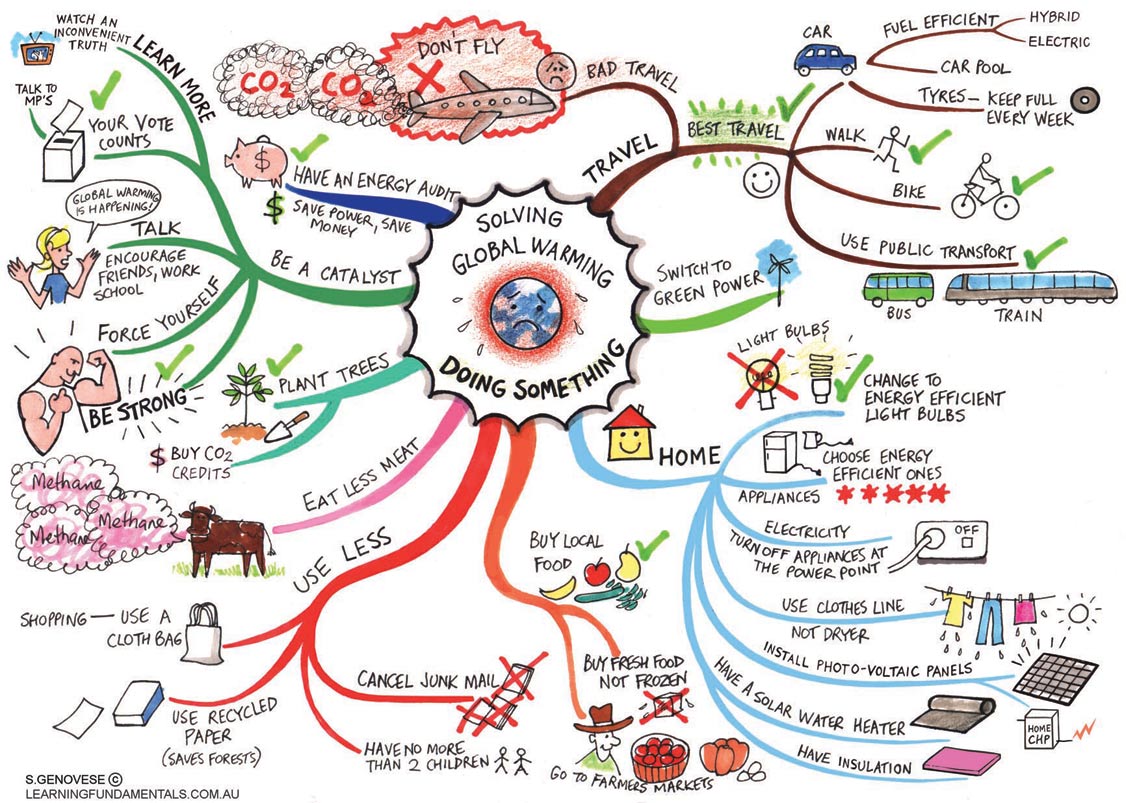
We serve nature and creation when we
- replace incandescent light bulbs with fluorescent,
- walk and not drive,
- conserve heat and water,
- refuse, reuse, reduce, recycle,
- make a lifestyle change to lessen our carbon footprint,
- write a letter of environmental advocacy to an elected official,
- buy local and organic,
- read and raise aware of the global devastation of climate change,
- and of course, we serve God and honor the members of our animal family best when we choose a plant-based vegan diet!

My prayer is that we would each grow in our love of God, and grow in love for your neighbors by serving, not just humanity, but the "other neighbors" as well that live in the beauty of our communities, on this home we call planet earth.

"I do not think that the measure of a civilization is how tall its buildings of concrete are, but rather how well its people have learned to relate to their environment and fellow human being."
 (Sun Bear, Chippewa medicine man)

Here are some suggestions of what you can do to combat global warming...