


With Labor Day weekend here and my courses at FST beginning this week, summer is now over. Unfortunately, my summer plan to teach about vegan nutrition via this blog never materialized. The primary reason: MY COMPUTER, which had major issues early June and finally crashed on my birthday. By the time I purchased a new lap-top and was back to full on-line functioning, it was mid-August. With school around the corner, I decided to enjoy the rest of the summer, which I did.
During the summer, I took many steps forward in my journey as a "raw (or rawer) vegan". I have new restaurants and stores, which I will review. And I have numerous experiences, which I plan to share as I get back into the discipline of reading, writing, and blogging (unless of course, a full-time course load and part-time work get the best of me!).
Though I was not able to use this blog to articulate the nutritional value of a vegan and especially a raw vegan diet, my vegan life was able to make a positive difference this summer. Many of the vegetarian resources say that the greatest impact you can have in changing someone's diet and ultimately improving their health comes through your example and lifestyle. By doing what you do, and eating as you eat, people are watching and learning. I discovered the reality of this over the summer.
At camp these past months, I've been basing many more meals around the main kitchen. With the freshest produce in the walk-in fridge, it has been a lot of "grab and go." As my diet shifted and I began to decline certain meals, one of the cooks asked me point blank one day early this summer = "You're eating raw, aren't you?"
I had barely admitted to myself that I was a raw vegan, but caught red-handed, I fumbled for an answer and tentatively replied, "Yeah, I guess I'm eating rawer."
From the beginning, she has been observing my changing food choices. We've talked casually about diet, and she's overheard conversations I've had with her husband about health and fitness. And just last week she shared with me that she's taking a step forward with her health and giving up red meat. I'm so proud of her! Though hamburgers are still her weakness, it's a start and we all start somewhere. With the changes she has made, she's been feeling more energetic, less bogged down, and has even begun to lose weight!
At the neighborhood food pantry where I volunteer, I've had numerous opportunities to share about my diet. As we sort food, take food, and read food labels, we simply end up talking about food each Sunday. The food pantry workers are probably the first to learn about my latest decisions surrounding food choices, especially this summer as I've taken the "road less cooked."
A few weeks back, our food distribution coordinator shared with me that she has decided to eat raw during the daytime. It's been going very well and she is now enjoying it. Though she still cooks breakfast and dinner for her husband and family, she has shared that there are days she simply doesn't feel like eating what she's prepared so she will sit there with raw snap peas, her new favorite snack food.
She shared again today how Sunday after church lunches at a restaurant are now making her sick, and how, after the empenadas she had today, she thinks she's finally getting the message = Don't eat it! Her taste buds are changing, her body is detoxing, and through it, she has now lost 13 pounds in about 3 weeks. Her skin has cleared up and her allergies have not been as bad, and if anything, are disappearing. The wonders of going raw!
Her new favorite TV show is now on BBC America, "You are what you eat!" I've not seen it, but it sounds like my kind of show. She shared about one episode where they used 200 pounds of beef to form a human body, and then poured fat on it. The fat immediately coagulated when it touched the cold dead cow. Disgusting. She said, "The image would make any meat eater turn."
While I cannot take ALL the credit for her decision to eat raw during the day times, I do believe that my eating habits did have an influence.
As St. Francis is believed to have said (though I've not yet found it in my readings): "Preach the gospel. And if necessary, use words." Though I wasn't able to "teach" about vegan nutrition this summer, I am thankful that my example did encourage others to choose healthier and more environmentally friendly options in diet and lifestyle. And that is what this blog is really all about.
Showing posts with label integrity. Show all posts
Showing posts with label integrity. Show all posts
Sunday, August 31, 2008

Sunday, May 4, 2008
A bug's life
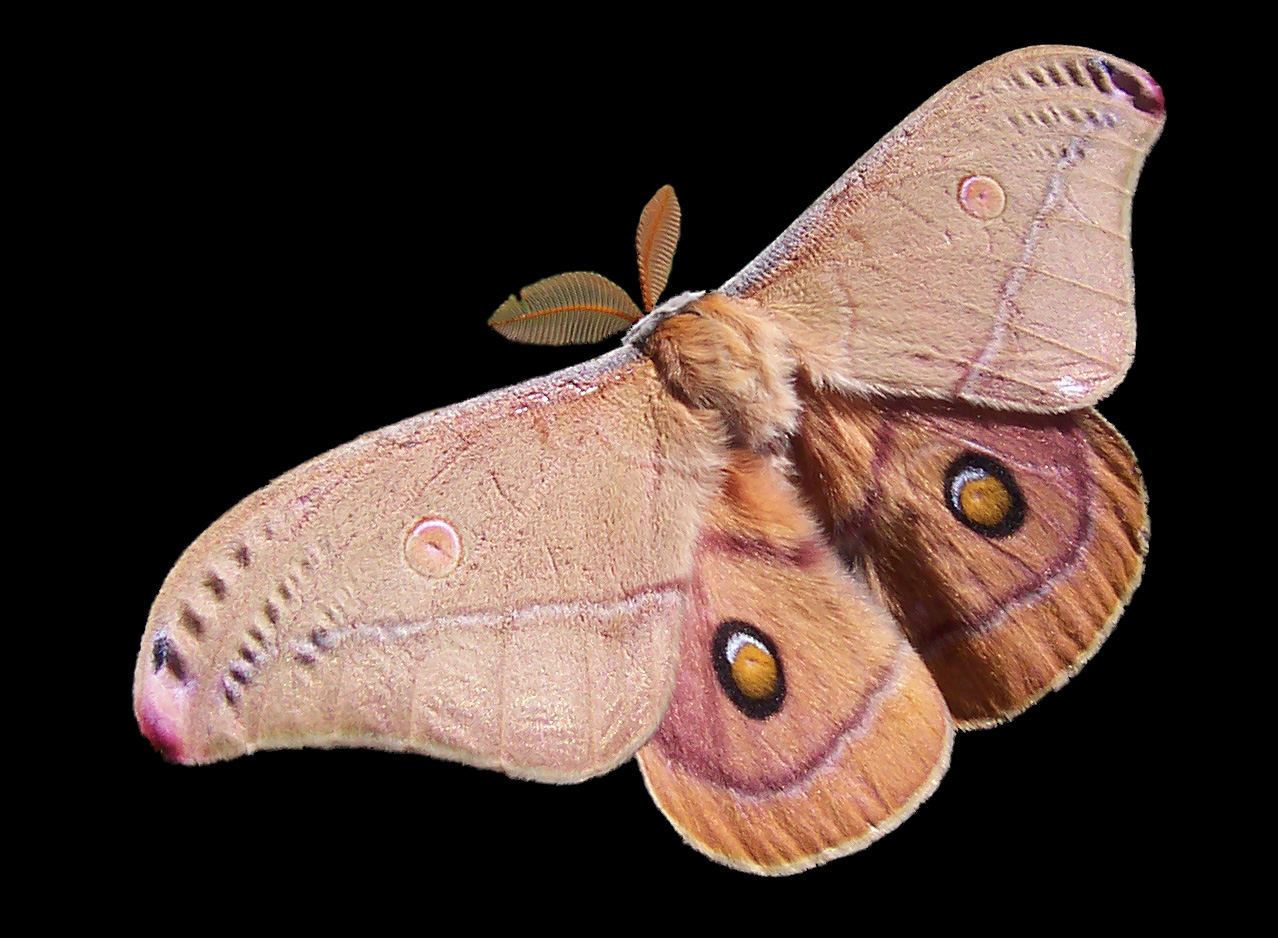 While journaling this morning, a huge moth came flying out from under the table and nearly knocked me in the face. Spring has sprung here up in the mountains. The bugs are finding new life. And vegan-me is working through what it means to live with compassionate care for ALL of God's creatures, including those "non-sentient" (aka "not able to feel or emotionally respond ") creatures, like moths and the summer dread up here at camp, mosquitoes.
Vegan values embrace compassionate care for all life, which means honoring all that God has made, including insects, bugs, and rodents. While it is easy to care for "sentient creatures" like cows and dogs, it often becomes a stretch to see the rationale in respecting those creatures that don't have emotional capacity, which are simply annoyances. For me, it is an issue of integrity, which is an important value in my life. Thus, I maintain true to my commitment to compassionate care for all of creation, respecting the life of the "non-sentient", and tolerating those pesky bugs that emerge as the spring warms into summer.
As Joanne Stepaniak writes, "For vegans, the issue isn't finding a reason not to kill but learning what it means to honor life." (Being Vegan, p. 31)
Luckily last summer (my first vegan summer), mosquitoes were not a problem, but it is still an exercise in restraint, not squashing one that has landed, ready to bite. I shake and blow instead, and it seems to work for me. And with bees during barbecues at the picnic area, I simply do not bother them and they do not bother me.
Inside, I am learning "compassionate bug capture" for those moths that get in and fruit flies that like my produce. I have a clear plastic cup, which I use to enclose them when they land on a wall or window. I then slip a piece of paper underneath to escort my "new friends" from my home to theirs, out the front door so they can fly and be free, and no longer bother me! Spiders I've learned to ignore, and luckily, I've not had to face ant swarms or rodent invasions in my place. If I do, you'll probably read it on the blog as I cross that ethical vegan dilemma when the time comes.
Though creatures like that are bothersome as the weather warms, I am thankful for the beauty of butterflies that also emerge this time of year. At times there will be one or two which accompany me on a run along portion of our back trails. As I reflect on their transformation from bug to butterfly, they remind me of the many ways my life has been transformed over the years, and I am thankful for the new beauty I see in me as I run.
There are lessons to learn about the Creator from all of creation, including those pesky insects. The author of Proverbs writes: "Four things on earth are small, yet they are extremely wise: Ants are creatures of little strength, yet they store up their food in the summer; coneys are creatures of little power, yet they make their home in the crags; locusts have no king, yet they advance together in ranks; a lizard can be caught with the hand, yet it is found in kings' palaces." (Proverbs 30:24-28)
Startled by the moth earlier this morning, I followed it with my eyes as it flew around a bit before settling and landing. I quietly and slowly found my "bug capture cup" and proceeded to gently but quickly surround it, which I did. I wiggled it around to get it off the ground as the paper slipped underneath. I escorted it out, and released it. "Fly and be free."
Though not as beautiful as the butterflies on the trail, moths too are transformed. With their abundance around camp, they remind me of the transformations, which continue to occur in my life, which are not big, bold, and beautiful, but take place in the mundane decisions of everyday life around here. As I reflect on those, vegan-me is thankful. God is good, as I choose to praise the Creator, even for insects and bugs. We'll see however how thankful I am for mosquitoes this season.
Sunday, March 30, 2008
Look into my "I's"
While I enjoyed writing the six-part Lenten series on vegan principles, I am glad it is over. Each entry required a lot of time, thought, and emotional energy as I paused to consider how I am living out each of the values of ahimsa. This reinforced but also challenged my convictions.
The week of "I is for INTEGRITY" was especially humbling as I found myself tripping over hypocrisy in my "non-vegan" life (way outside the realm of this blog). Caught in "the act", I was forced to face my blind spots and some inconsistencies in a few value-based choices. This revelation caused me to begin questioning the integrity in my "vegan life", especially the exceptions in my vegan diet. Do my "vegan exceptions" discredit my integrity and thus, mar my character? May be the time had come to eliminate all exceptions and fully live "animal free" in consistent integrity as a vegan. I needed to at least try.
As I have blogged, my exceptions are:
1. Dining out
2. Indian buffets
3. The "celebration dessert"
And of course... 4. Chocolate cake
During Lent, I dined out with my parent's for my mom's birthday. At the restaurant, I intentionally asked the wait staff to make my meal vegan. While Caesar salad was the standard for the restaurant, our server prepped a special salad for me with oil and vinegar. However, the "vegan pasta" I requested came with cheese sprinkled all over the top. I explained to her that "vegan" includes "no cheese", but rather than asking her to take it back, and thus wasting the food, I decided to keep it and tried to scrape off the melted cheese to no avail. I ended up eating the meal, but did not enjoy it as my intentional attempt to eat vegan while dining out failed.
Over Lent, I also went out with some friends, and each time, rather than dine at an Indian buffet, which typically serves North Indian cuisine, I intentionally requested we try South Indian cuisine, which tends to be vegan-friendly. I visited two different places: Annapoorna in San Mateo, and Dasaprakash in Santa Clara. In both instances, I specifically asked for vegan substitutions. Learning from the dining experience with my parents, and reading in a vegan resource about the need to be very specific, I explained to the wait staff what not to include in my thali. The server said he would switch out the curries, and in both restaurants, everything was delicious, though the food at Dasaprakash tended to feel "oiler". As I become more familiar with Southern Indian food, I hope to check these places out again and review them. Let me know if you'd like to check them out with me!
As a cake was cut at one celebration during Lent, I was asked point blank by the hostess, "You do eat this, don't you?" Not wanting to offend, I said, "Sure", and was handed a piece. As I headed to the kitchen to get soy milk to go with the basic white cake (which I really didn't want to eat), I soon discovered that other guests were choosing not to take a slice = "I'm too full." "I'm on a diet." I stood there with my cake thinking, "I'm on a diet too - a vegan diet. Why didn't I just say, 'No, but thank you'?"
During Lent, I also began playing around with my vegan chocolate cake recipe. I also began creating a few new recipes, which I will post in the coming weeks. I am discovering that I enjoy experimenting with vegan dishes, and learning about food. How to enhance chocolate flavors in vegan desserts is one current curiosity.
While I was able to uphold my vegan integrity in a few situations during Lent, I did "totally screw up", or at least, I felt like I had failed in others - all because of something I chose to eat! There were moments I felt really guilty, like I had been caught in some great trespass. I want to honor the Creator through my lifestyle, choices, and integrity, but there I am eating cake, which I didn't want, didn't need, but felt forced to take. Guilt.
In one of his sermons, 13th century Franciscan Anthony of Padua said,
 "Do you want to carry God in your heart everyday? Look constantly at yourself. Where your eye is, there is your heart. Keep your eyes fixed constantly on yourself. I mention three items: your heart, your eye, yourself. God is in your heart, your heart is in your eye, your eye is in you. So, if you are looking at yourself, you are looking at God in you. Do you want to have God in your heart everyday? Then, be what God has created you to be. Do not look for another I in yourself. Do not try to be anything other than what God created you to be, and you will constantly have God in your heart." (emphasis added)
When guilt-ridden, I know that I am looking for the "other I in myself." The "other I" is "the perfect vegan", "the perfect Jesus follower", "the perfect student", "the perfect employee", "the perfect friend", "the perfect adult child of my parents". There is an ideal I have of myself, and when I do not live up to this ideal, I feel like a failure. My vegan "other I" wants me to feel bad about my blind spots, my exceptions, my lapses in judgment.
I might know of God's grace intellectually, but I'm stilling growing in my knowledge of God's grace experientially. The God I trust is the God of grace, the God who showed the full extent of divine love through the life, death, and resurrection of Jesus, which we remembered just last week during Easter. I trust that God looks at me with love and compassion, especially as I strive to make the best vegan choices I can as I choose to gaze upon all that God has made with the same love and compassion God has for me. I am learning to live each day in that love, in that grace.
Guilt, I believe, comes from judgment based upon the verdict of a final result. Grace, on the other hand, comes from the assurance that all of life is a process as we carry God in our heart each day. As Anthony of Padua affirms, if I continually look at myself, I am looking at God in my heart. God created me as I am and blessed me with the gift of each day. As I carefully consider the choices I make, I do not need to "feel guity" because I live in grace, God's grace, even with my blind spots, even with lapses of integrity, even with my vegan exceptions.
The week of "I is for INTEGRITY" was especially humbling as I found myself tripping over hypocrisy in my "non-vegan" life (way outside the realm of this blog). Caught in "the act", I was forced to face my blind spots and some inconsistencies in a few value-based choices. This revelation caused me to begin questioning the integrity in my "vegan life", especially the exceptions in my vegan diet. Do my "vegan exceptions" discredit my integrity and thus, mar my character? May be the time had come to eliminate all exceptions and fully live "animal free" in consistent integrity as a vegan. I needed to at least try.
As I have blogged, my exceptions are:
1. Dining out
2. Indian buffets
3. The "celebration dessert"
And of course... 4. Chocolate cake
During Lent, I dined out with my parent's for my mom's birthday. At the restaurant, I intentionally asked the wait staff to make my meal vegan. While Caesar salad was the standard for the restaurant, our server prepped a special salad for me with oil and vinegar. However, the "vegan pasta" I requested came with cheese sprinkled all over the top. I explained to her that "vegan" includes "no cheese", but rather than asking her to take it back, and thus wasting the food, I decided to keep it and tried to scrape off the melted cheese to no avail. I ended up eating the meal, but did not enjoy it as my intentional attempt to eat vegan while dining out failed.
Over Lent, I also went out with some friends, and each time, rather than dine at an Indian buffet, which typically serves North Indian cuisine, I intentionally requested we try South Indian cuisine, which tends to be vegan-friendly. I visited two different places: Annapoorna in San Mateo, and Dasaprakash in Santa Clara. In both instances, I specifically asked for vegan substitutions. Learning from the dining experience with my parents, and reading in a vegan resource about the need to be very specific, I explained to the wait staff what not to include in my thali. The server said he would switch out the curries, and in both restaurants, everything was delicious, though the food at Dasaprakash tended to feel "oiler". As I become more familiar with Southern Indian food, I hope to check these places out again and review them. Let me know if you'd like to check them out with me!
As a cake was cut at one celebration during Lent, I was asked point blank by the hostess, "You do eat this, don't you?" Not wanting to offend, I said, "Sure", and was handed a piece. As I headed to the kitchen to get soy milk to go with the basic white cake (which I really didn't want to eat), I soon discovered that other guests were choosing not to take a slice = "I'm too full." "I'm on a diet." I stood there with my cake thinking, "I'm on a diet too - a vegan diet. Why didn't I just say, 'No, but thank you'?"
During Lent, I also began playing around with my vegan chocolate cake recipe. I also began creating a few new recipes, which I will post in the coming weeks. I am discovering that I enjoy experimenting with vegan dishes, and learning about food. How to enhance chocolate flavors in vegan desserts is one current curiosity.
While I was able to uphold my vegan integrity in a few situations during Lent, I did "totally screw up", or at least, I felt like I had failed in others - all because of something I chose to eat! There were moments I felt really guilty, like I had been caught in some great trespass. I want to honor the Creator through my lifestyle, choices, and integrity, but there I am eating cake, which I didn't want, didn't need, but felt forced to take. Guilt.
In one of his sermons, 13th century Franciscan Anthony of Padua said,
 "Do you want to carry God in your heart everyday? Look constantly at yourself. Where your eye is, there is your heart. Keep your eyes fixed constantly on yourself. I mention three items: your heart, your eye, yourself. God is in your heart, your heart is in your eye, your eye is in you. So, if you are looking at yourself, you are looking at God in you. Do you want to have God in your heart everyday? Then, be what God has created you to be. Do not look for another I in yourself. Do not try to be anything other than what God created you to be, and you will constantly have God in your heart." (emphasis added)
When guilt-ridden, I know that I am looking for the "other I in myself." The "other I" is "the perfect vegan", "the perfect Jesus follower", "the perfect student", "the perfect employee", "the perfect friend", "the perfect adult child of my parents". There is an ideal I have of myself, and when I do not live up to this ideal, I feel like a failure. My vegan "other I" wants me to feel bad about my blind spots, my exceptions, my lapses in judgment.
I might know of God's grace intellectually, but I'm stilling growing in my knowledge of God's grace experientially. The God I trust is the God of grace, the God who showed the full extent of divine love through the life, death, and resurrection of Jesus, which we remembered just last week during Easter. I trust that God looks at me with love and compassion, especially as I strive to make the best vegan choices I can as I choose to gaze upon all that God has made with the same love and compassion God has for me. I am learning to live each day in that love, in that grace.
Guilt, I believe, comes from judgment based upon the verdict of a final result. Grace, on the other hand, comes from the assurance that all of life is a process as we carry God in our heart each day. As Anthony of Padua affirms, if I continually look at myself, I am looking at God in my heart. God created me as I am and blessed me with the gift of each day. As I carefully consider the choices I make, I do not need to "feel guity" because I live in grace, God's grace, even with my blind spots, even with lapses of integrity, even with my vegan exceptions.
Sunday, March 2, 2008
Being vegan: I is for...
An oxymoron is a figure of speech that combines two normally contradictory terms. It is a phrase that makes you go, "hmm" as you consider the meaning of each separate word. Some familiar oxymorons: "jumbo shrimp", "pretty ugly", "silent scream", and everyone's favorite, "Microsoft works".
Though technically not "oxymorons", Joanne Stepaniak considers a few paradoxes in her book, Being Vegan that cause you to pause and think:
- consumers who purchase dolphin-safe tuna (what about tuna safety?)
- a bird-watcher who eats poultry
- an antiabortionist who supports capital punishment
- an animal rights activist who wears leather shoes
There is a degree of irony, she suggests, when compassion is selectively applied.
"The vegan ethic," Stepaniak writes, "applies compassion indiscriminately. In theory, vegans are concerned about every group or individual who is exploited, human or nonhuman." (p. 52) The challenge is taking that theory, and applying it to one's daily decisions.
While everyone has blind spots, vegans strive to recognize their own, and then to do something about them, because the third core principle of veganism:
I is for INTEGRITY of thought, word, and deed
Integrity is about consistency -- consistency in what a person thinks, says, and does. Integrity calls us to watch for blind spots so that no one will go "Hmm" if they were to observe our lives. Integrity is rooted in one's character, and character is "who you are when no one (but God) is watching."
In his ministry, Jesus confronted the hypocrisy he witnessed in people, especially "religious-types", who articulated high moral values but failed to live them out. "Simply let your 'Yes' be 'Yes,' and your 'No,' 'No'," Jesus said in Matthew 5:37. Do what you say. Say what you do. Consistency in character is the call for one who claims to follow Christ.
It was a year ago that I made the transition in my diet from "occasional meat eater" to "vegetarian". As my convictions were forming about why a non-meat diet was healthful for me and helpful for the environment, I came to believe that if I were to continue eating meat, I would need (I journaled) "a rationale for why I may choose meat so it does not appear to simply be at random." Finding no good reason, I was soon selecting non-meat dishes every meal. As I continued to read and to research vegetarianism and veganism, the transition to an animal-free diet (no dairy, eggs, et al) and then to an animal-free lifestyle was a logical journey of personal integrity based in compassion.
Stepaniak writes, "Compassion, according to vegan principles, accords no hierarchy of lesser or greater value to any living being. To vegans, all life is equally precious." (p. 88) And as a follower of Jesus, that is foundational to my values, too.
Much of my vegan journey has been rooted in the question = WHY? Why do I need to eat this? Why do I need to purchase this? Why do I believe this? Why do I value that? If there is a more compassionate alternative which would extend care to creation, cut down my carbon footprint, love others, and honor God, then why would I NOT want to do that?
I still have my vegan blind spots, about which I have blogged. My dietary exceptions (including chocolate cake) are one area, but there are others. I wrestle with what those exceptions and blind spots suggest to others, and how they impact my integrity as a vegan. My journey continues.
I'm taking a course at the Franciscan School of Theology this semester. I'm prayerfully considering a full-time return to seminary. The more I learn about Saint Francis of Assisi, the more I am drawn to Franciscan creation theology and eco-spirituality. Because of his love for God the Creator, Francis lived in harmony with all creation and because of his love for Jesus the Christ, he lived in the fullness of the gospel, the poverty that is found in full dependence on God. The patron saint of animals and ecology was a man of deep integrity.

In The Life of Saint Francis, Julian of Speyer notes, "Since he traced all things back to their beginning, he called every creature 'brother,' and, in his own praises, continuously invited all creatures to praise their one common Creator." (p. 401) For Francis, the key to his integrity was living in God's original intention at creation, which I highlighted last week.
"As it was in the beginning is now and will be forever" is a common phrase in the praises attributed to St. Francis. As I strive to live as a vegan follower of Christ, I find this an inspiration for my integrity = To live each day in the Garden principle of "harmlessness", envisioned by the prophet Isaiah to be re-established with the return of the Christ. "As it was in the beginning is now and will be forever."
"There is an incredibly rewarding sense of peace and satisfaction in knowing that we are doing the best we can for those most in need," writes Stepaniak. "The outcome is irrelevant because, if we embody our ethics, the influence of our short presence on this earth will continue its effects long after we are gone." (p. 60)
As you journey with integrity this Lenten season, may you in the end be found faithful.
Though technically not "oxymorons", Joanne Stepaniak considers a few paradoxes in her book, Being Vegan that cause you to pause and think:
- consumers who purchase dolphin-safe tuna (what about tuna safety?)
- a bird-watcher who eats poultry
- an antiabortionist who supports capital punishment
- an animal rights activist who wears leather shoes
There is a degree of irony, she suggests, when compassion is selectively applied.
"The vegan ethic," Stepaniak writes, "applies compassion indiscriminately. In theory, vegans are concerned about every group or individual who is exploited, human or nonhuman." (p. 52) The challenge is taking that theory, and applying it to one's daily decisions.
While everyone has blind spots, vegans strive to recognize their own, and then to do something about them, because the third core principle of veganism:
I is for INTEGRITY of thought, word, and deed
Integrity is about consistency -- consistency in what a person thinks, says, and does. Integrity calls us to watch for blind spots so that no one will go "Hmm" if they were to observe our lives. Integrity is rooted in one's character, and character is "who you are when no one (but God) is watching."
In his ministry, Jesus confronted the hypocrisy he witnessed in people, especially "religious-types", who articulated high moral values but failed to live them out. "Simply let your 'Yes' be 'Yes,' and your 'No,' 'No'," Jesus said in Matthew 5:37. Do what you say. Say what you do. Consistency in character is the call for one who claims to follow Christ.
It was a year ago that I made the transition in my diet from "occasional meat eater" to "vegetarian". As my convictions were forming about why a non-meat diet was healthful for me and helpful for the environment, I came to believe that if I were to continue eating meat, I would need (I journaled) "a rationale for why I may choose meat so it does not appear to simply be at random." Finding no good reason, I was soon selecting non-meat dishes every meal. As I continued to read and to research vegetarianism and veganism, the transition to an animal-free diet (no dairy, eggs, et al) and then to an animal-free lifestyle was a logical journey of personal integrity based in compassion.
Stepaniak writes, "Compassion, according to vegan principles, accords no hierarchy of lesser or greater value to any living being. To vegans, all life is equally precious." (p. 88) And as a follower of Jesus, that is foundational to my values, too.
Much of my vegan journey has been rooted in the question = WHY? Why do I need to eat this? Why do I need to purchase this? Why do I believe this? Why do I value that? If there is a more compassionate alternative which would extend care to creation, cut down my carbon footprint, love others, and honor God, then why would I NOT want to do that?
I still have my vegan blind spots, about which I have blogged. My dietary exceptions (including chocolate cake) are one area, but there are others. I wrestle with what those exceptions and blind spots suggest to others, and how they impact my integrity as a vegan. My journey continues.
I'm taking a course at the Franciscan School of Theology this semester. I'm prayerfully considering a full-time return to seminary. The more I learn about Saint Francis of Assisi, the more I am drawn to Franciscan creation theology and eco-spirituality. Because of his love for God the Creator, Francis lived in harmony with all creation and because of his love for Jesus the Christ, he lived in the fullness of the gospel, the poverty that is found in full dependence on God. The patron saint of animals and ecology was a man of deep integrity.

In The Life of Saint Francis, Julian of Speyer notes, "Since he traced all things back to their beginning, he called every creature 'brother,' and, in his own praises, continuously invited all creatures to praise their one common Creator." (p. 401) For Francis, the key to his integrity was living in God's original intention at creation, which I highlighted last week.
"As it was in the beginning is now and will be forever" is a common phrase in the praises attributed to St. Francis. As I strive to live as a vegan follower of Christ, I find this an inspiration for my integrity = To live each day in the Garden principle of "harmlessness", envisioned by the prophet Isaiah to be re-established with the return of the Christ. "As it was in the beginning is now and will be forever."
"There is an incredibly rewarding sense of peace and satisfaction in knowing that we are doing the best we can for those most in need," writes Stepaniak. "The outcome is irrelevant because, if we embody our ethics, the influence of our short presence on this earth will continue its effects long after we are gone." (p. 60)
As you journey with integrity this Lenten season, may you in the end be found faithful.
Subscribe to:
Posts (Atom)